Military Manpower Administration
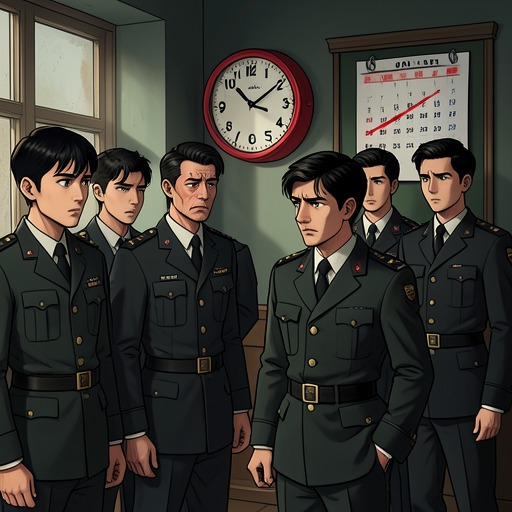
O fenômeno Jungkook: O sucesso do BTS e a criação de um superstar mundialThe Military Manpower Administration is the South Korean authority associated in the book with the administration of compulsory military service and the public debate over who may defer or avoid it. Its significance becomes especially visible through BTS: the group’s international fame made its members symbols of national prestige, but that very status raised questions about whether exceptional cultural influence should grant them treatment unavailable to other men. The institution therefore stands at the intersection of military obligation, bodily qualification, celebrity labor, and contested ideas of fairness.
Mandate and Military Obligation
The administration operates within a system in which military service is presented as both a legal requirement and a collective rite of passage. Since 2023, South Korean men between eighteen and thirty-five have been eligible to serve and are expected to complete their mandatory service before turning twenty-eight, although special deferments can alter that timetable. Women are not required to serve but may volunteer. Eligibility is determined through physical and psychological examinations; those judged unfit for active duty may qualify for social-service positions, including administrative work such as monitoring subway stations, generally for a longer period than active service. The standard term, formerly two years, had been reduced to roughly eighteen months by 2022.
This framework is inseparable from the security conditions surrounding South Korea. The book places compulsory service against the continuing division of the Korean Peninsula: the Korean War ended in an armistice rather than a formal peace treaty, and Seoul lies only about fifty-five kilometers from the Demilitarized Zone. Military service is consequently described as an unfortunate necessity rather than an abstract administrative ritual. Publicly, men are expected to accept it with patriotic pride; privately, the prospect is associated with fear, physical and psychological strain, hazing, and the loss of almost two years of youth.
Deferment, Exemption, and Public Fairness
The administration became a central voice in the controversy over whether BTS should receive special treatment. South Korea has precedents for exemptions based on achievements that enhance the country’s prestige abroad. Athletes, esports players, and classical musicians have benefited from such provisions, including Son Heungmin after winning gold at the 2018 Asian Games, Lee Sanghyeok, known as Faker, and his teammates after the 2023 Asian Games, and pianist Seong-Jin Cho after winning the 2015 Chopin International Piano Competition. Yet lawmakers struggled to identify equally clear criteria for idols, whose contributions are cultural, global, and economically significant but less tangible than a medal or competition victory.
In 2020, the National Assembly’s National Defense Committee approved the measure popularly called the BTS Act. It allowed a pop-culture artist recommended by the Minister of Culture, Sports and Tourism for significantly improving South Korea’s image at home and abroad to defer enlistment for up to two additional years, permitting service at thirty rather than twenty-eight. The amendment explicitly argued that young pop artists often achieve their greatest accomplishments in their twenties and that interrupting their careers at their peak could harm both the artists and the nation.
The policy did not settle the question of complete exemption. In 2022, shortly before BTS visited the White House to meet President Joe Biden, Military Manpower Administration commissioner Lee Ki-sik connected the exemption debate to justice and equality among young South Koreans. The administration had been trying to reduce military exemptions, he said, but the BTS case had revived the issue. The concern was not simply whether BTS had contributed to the country’s global reputation; it was whether creating a celebrity exception would undermine the appearance that national sacrifice was shared.
That concern carried particular force because military avoidance has repeatedly produced public outrage. The book recounts cases involving people who allegedly manipulated dental, medical, or psychological conditions, as well as the singer Yoo Seung-jun, who delayed enlistment, obtained United States citizenship, renounced South Korean citizenship, and was subsequently barred from returning. Against this background, even comfortable civilian assignments or medically documented injuries can attract suspicion. The administration’s role is therefore framed not only as technical enforcement but also as a guardian of a highly sensitive social boundary: the distinction between legitimate accommodation and privilege purchased through fame.
BTS and the State’s Cultural Investment
The debate over BTS emerged from a broader transformation in which popular entertainment became an instrument of national representation. After the 1997 financial crisis, the South Korean government invested heavily in culture and entertainment, with the Ministry of Culture, Sports and Tourism receiving funds to promote K-pop and develop the country’s soft power. A consultative committee established in 2012 supported the expanding global popularity of Korean culture with hundreds of millions of dollars in allocations. As a result, entertainment once treated as disposable amusement became a major export and a source of national pride.
BTS came to embody that transformation. The group was increasingly expected to satisfy audiences seeking both artists and idols while also representing South Korea abroad. Its international activities expanded the members’ exposure to other cultures and ways of thinking, while their public positions gave the country a form of visibility that traditional diplomacy could not easily reproduce. BTS donated one million dollars to the Black Lives Matter movement in 2020, and ARMY matched the donation within twenty-five hours. In 2018, the group worked with UNICEF through the Love Myself campaign and a program aimed at ending violence against children. During the global pandemic, President Moon Jae-in brought BTS to the United Nations General Assembly, where the members received red diplomatic passports and were appointed special presidential envoys for future generations and culture. They performed Permission to Dance in the Assembly Hall and urged vaccination and encouragement for young people facing pandemic-era difficulties.
These achievements strengthened the argument that BTS had elevated South Korea’s image in ways comparable to, or even exceeding, the achievements traditionally recognized by exemption programs. They also made the administration’s dilemma sharper. The state had helped build the cultural infrastructure through which BTS became a global national asset, but military law still treated the members as individual Korean men subject to a common obligation.
Jungkook’s Enlistment and Institutional Meaning
BTS’s members never publicly demanded exemption and appeared reluctant to accept one. Jin enlisted in December 2022 at thirty, J-Hope followed in April 2023 at twenty-nine, and SUGA enlisted at thirty in September. RM entered service in December at twenty-nine. Jimin, V, and Jungkook still had roughly three years before the ordinary deadline, yet chose to enlist alongside the older members. This collective timing differed from the usual K-pop strategy of staggered enlistment, which allows a group to maintain public visibility and continue releasing music while individual members serve.
Jungkook’s decision exposed the personal cost behind the administration’s legal timetable. On December 8, shortly after the group’s final live broadcast before enlistment, he spoke to ARMY after a run with his shaved head still hidden beneath a black cap. Sitting at home beneath orange lighting saved under the name izakaya, he acknowledged that fans were sad and admitted that he was sad as well. His comment that the army was where all men went and that he had to go contrasted with the polished public image of the BTS idol accepting duty with a patriotic smile.
In December 2023, Jungkook and Jimin entered the Army’s Fifth Infantry Division in Yeoncheon County, Gyeonggi Province, about sixty kilometers north of Seoul, where Jin was already serving as an assistant instructor. After five weeks of basic training, Jungkook became a cook, chopping vegetables and preparing large quantities of meat for soldiers. His service marked more than a pause in his solo career. For an idol whose professional identity depends on youth, beauty, performance, and constant visibility, enlistment required a forced change of bodily and occupational identity: the shaved head and military role signaled a temporary departure from idol life and a return to the status of an ordinary serviceman.
The administration’s institutional logic thus reaches beyond paperwork. It governs the timing of celebrity careers, determines when a performer must leave the stage, and places a globally recognized figure inside a shared national schedule. Jungkook’s service illustrates the tension between the state’s use of cultural stars as representatives and its insistence that they remain subject to the same military order as other eligible men.
Institutional and Narrative Significance
The Military Manpower Administration embodies a form of state power that manages bodies, eligibility, professional time, and national belonging. The book places this authority in implicit contrast with other systems that regulate Jungkook’s body: the medical licensing requirement surrounding tattoos, the intensive beauty standards imposed on K-pop performers, restrictive diets, cosmetic procedures, and the industry’s demand for an appearance that can represent both Korea and global desirability. Military service adds another decisive layer. The idol body that is trained, styled, photographed, and marketed must also be examined, classified, disciplined, and eventually placed in uniform.
Its significance is also ethical rather than merely administrative. The debate over BTS asks whether justice means identical treatment, proportionate recognition of exceptional contribution, or the preservation of a shared sacrifice even when exceptions might benefit the nation. Military Manpower Administration commissioner Lee Ki-sik’s invocation of justice and equality captures the dilemma: BTS’s achievements made their case unusually persuasive, but the same fame risked making exemption look like a privilege reserved for the powerful.
For Jungkook, the result was an interruption that arrived just as he was beginning to ask who he was beyond BTS. His military placement temporarily removed him from the performance system and its relentless demands, but it did so through compulsory service rather than personal freedom. The institution therefore functions in the narrative as both a national necessity and a force of rupture, ending one phase of his public identity while placing him inside the collective experience that South Korean society expects its men to share.